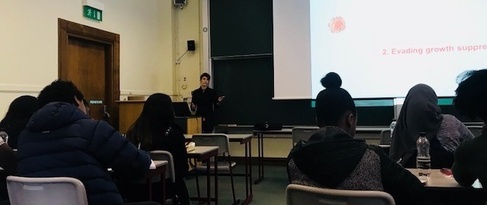
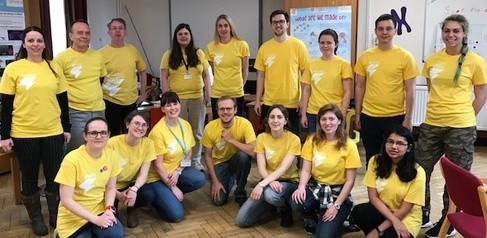
Our public engagement and outreach activities over the past six years.
Big Biology Day, October 2025
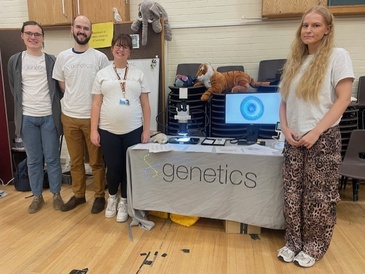
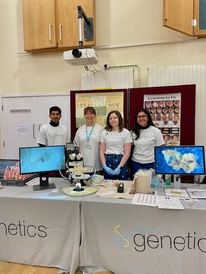
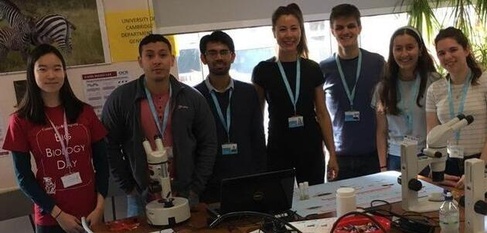
The Department took part in this year's Big Biology Day at Hills Road Sixth Form on Saturday 11 October.
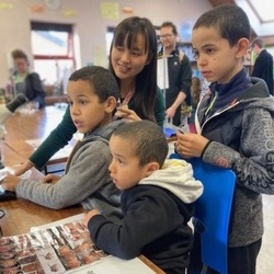
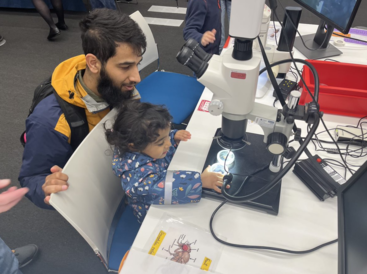
Visitors peered through microscopes at real tissue samples from animals and plants with wildly different lifespans. They also played our lifespan guessing game — could they match each animal to its place on the “lifespan scale”?
Meet our fruit flies! Guests used microscopes to see how different mutations changed their appearance and biology.
Whether they were curious about whales that lived for centuries or tiny flies that helped unlock the secrets of DNA, our stall was full of discoveries for all ages.
Volunteers were: Margherita Battistara, Alex Cagan, Lottie Groocock, Robert Powles, Bernadeta Rupainyte, Martin Santamarina Garcia and Maciek Zurowski
Magdalene College Residential, August 2025
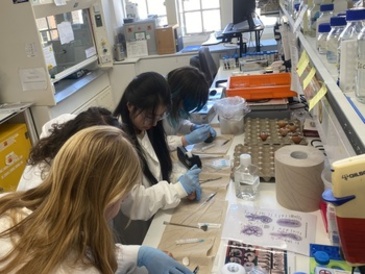
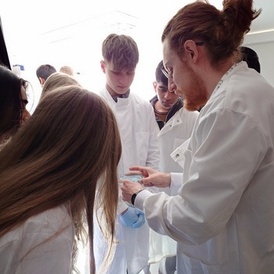
Due to the success of the residential visit in April, the Steventon Group were invited to take part in a second one this year with UK-based prospective applicants of Bangladeshi, Pakistani, and Arab heritage. The students had the opportunity of learning how to "window" eggs to see developing eyes, brain, limbs and even a beating heart. They also got to view zebrafish embryos and exploring their fast, transparent development under microscopes, spotting key features, and comparing wildtype vs mutant embryos.
Icelandic Visit, August 2025
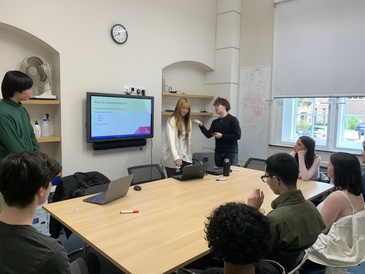
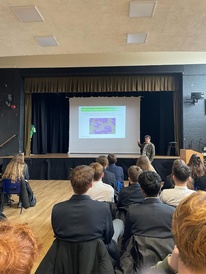
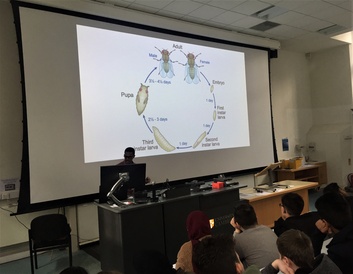
The Department hosted a visit by 18 students and 5 staff from two Gymnasium schools (Menntaskólinn við Hamrahlíð and Verzlunarskóli College) in Reykajvik Iceland as part of a programme for students to visit science labs and ecosystems outside of Iceland. Organised by Donna Golach from AIOS AI, the aim was to provide the students an opportunity to understand more about how life science research and stimulate their imagination, scientific curiosity and entrepreneurship. During the visit the students heard a short talk from our Head of Department Steve on the history and current structure of the Department along with some personal reflections of his life in science (along with a snapshot of his Bjork record collection). Students then toured the Department to see how real research labs look (in contrast to the glossy brochure presentation of science labs) and explored some of our mutant drosophila lines in the fly lab guided by Tharini Kumar, one of our Postgraduate students. The students enjoyed the visit and asked many insightful questions across the visit. As ever it is always a pleasure to host young people in the Department and open their eyes to the excitement in modern Genetics.
Magdalene College Residential, April 2025
Each year Magdalene College arrange a residential trip for Year 12 students attending state-maintained school in Merseyside of the Isle of Man. A group of these students came to the Department to experience life in the lab. The Steventon Group ran two activities for the students during their visit.
For the chicken activity: the students joined Alex in the main lab to learn how to window a chicken egg: a process that allows you to observe the developing embryo inside. They watched her demonstration before having a go themselves, then identified the major structures they could see at 4 days of development, such as the eyes, brain, tail and limb buds. But the most obvious structure was the heart, pumping blood around an extensive blood vessel network that covers the yolk. One student was even lucky enough to open an egg and find twins – a rare occurrence where two separate embryos develop within the same egg. After windowing, they moved over to the Embryo Room where Bassel showed them how to better visualise the embryos under the dissecting microscopes and label the main structures on a worksheet, all while sharing his extensive knowledge of bird evolution.
For the zebrafish activity: Carlos and Dillan introduced the advantages of working with zebrafish, that they have transparent embryos that are good for imaging, they develop fast, can be easily treated with pharmacological drugs, and we can generate genetically modified animals either mutants or transgenics, we discussed the differences between these two types of genetically modified embryos. We demonstrated how to treat embryos with pharmacological drugs by addition the anaesthetic called tricane to the water to stop early muscular contractions in the embryo. The students then rotated around three stations, examining zebrafish embryos at different times in their development under the microscope guided by one of the team (Dillan, Carlos, Alice, Seun). The students were helped to identify key anatomical features of the embryo such as the yolk, the eye, the tail, and the heart and label these on a worksheet. They were encouraged to think about how this compares to the anatomy of the chicken embryo. The students could also observe the fluorescent signal from several transgenic lines which labelled different anatomical structures or subcellular locations and we discussed with them how you go about making transgenic lines. Finally the students were asked to identify differences between a wildtype embryo and a mutant in the gene cdx4, which results in problems in tail elongation/formation.
Volunteers: Dillan Saunders, Alex Neaverson, Carlos Camacho, Alice Yuen, Bassel Arnaout and Seun Ogundele
Cambridge Festival, March 2025
We had a fantastic team of volunteers help out at this year's Cambridge Festival. On Saturday 29th March we ran various activities including extracting DNA from a strawberry, studying different fly mutations under microscopes, observing chick embyos and making a double helix out of sweets.
Our volunteers were: Alberto Rosello-Diez, Alex Neaverson, Alice Yuen, Amanda Gardiner, Ana Morena Barriga, Lottie Groocock, Dillan Saunders, Helen Fogerty, Joseph Lewis, Maciej Zurowski, Ritwick Sawarkar, Simon Collier, Sneha Parmar, Swanee Douglas and Tharini Kumar.
Big Biology Day, October 2024
The Department took part in the Big Biology Day, held at Hills Road Sixth Form. We ran three activities; creating candy DNA, observing fly mutations and windowing of chick embryos.
Attendees had the opportunity to observe different fly mutations under the microscope and learn about their development.
Our researchers also demonstrated the technique 'windowing' so we can observe chick embryo development. These embryos are used to look at the very early stages of brain development; to work out when and how the early neural cells segregate into forebrain, midbrain, hindbrain and spinal cord.
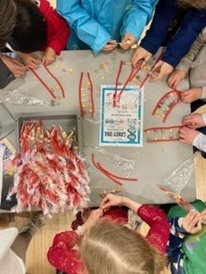
We also had an activity where attendees could make their own double helix structures using sweets. They had sweets identifying as the four chemicals (A. T, C and G) which they would pair up and add to the DNA "backbone". The model then needs to be given a twist and then ta-da a double helix! Which didn't last long before they were eaten...
Our volunteers were Lottie Groocock, Alejandra Guzman Herrera, Tharini Kumar, Constantina Laou, Alex Neaverson, Ritwick Sawarkar and Alice Yuen.
Magdalene College Residential, April 2024
The Department hosted fifteen Year 12 students from Merseyside and the Isle of Man as part of the annual Magdalene Residential. The group was split into two and did the two organised activities:
As a research group that uses fish and chick embryos as models to study development biology, the Steventon group guided pupils through various experimental techniques used in the lab. The goal was to spark the pupils' curiosity and inspire them to join the science community in exploring the wonders of the natural world.
Using a technique called windowing, the pupils were taught how to make a hole in the eggshell of 3-day old chick embryos. They observed the head, tail, beating heart, eyes, blood vessels and in some cases the early limb buds. They were also taught to inject ink underneath the embryo to increase contrast for better visualisation. (Activity ran by Bassel Arnaout, Alex Neaverson, and Yuri Takahashi)
The pupils were introduced to zebrafish development and shown live zebrafish at various developmental stages. They observed distinct anatomical features that are typically used to identify the age of the zebrafish. They were also taught to use the fluorescence microscope to visualise green fluorescent protein expressed in the neurons and pumping heart of transgenic zebrafish. (Activity ran by Carlos Camacho, Nick New, and Dillan Saunders)
The volunteers were Bassel Arnaout, Carlos Camacho, Alex Neaverson, Nick New, Dillan Saunders, and Yuri Takahashi
We split the groups into two, and started off with a short presentation on the basics of synthetic biology, and some of its common and interesting applications. We then ran a group brainstorming session, where both groups came up with some really interesting potential new applications of synthetic biology. From memory, one example was creating vegetables that taste nice; and a new way of producing energy in a renewable way.
The volunteers were: Lisa Milne, Jamie Terry, Cenyujia Wang, and Roger (Zijiao) Wang
Bright Horizons Nursery, March 2024
A team of volunteers from the Steventon Group attended Bright Horizons Nursery and hosted two activities. The children had the opportunity to make liquid rainbows from liquids with different densities. The children also pipetted different coloured liquid into a 12-well plate to make a pattern.
Our volunteers were: Alejandra Guzman Herrera, Clara Mutschler, Nick New, Stephanie Telerman, Alice Yuen and Imen Lassadi
Cambridge Festival, March 2024
We had a fantastic team of volunteers help out at this year's Cambridge Festival. On Saturday 23rd and Sunday 24th March we ran various activities including extracting DNA from a strawberry, creating candy DNA and pipetting fun patterns.
Our volunteers were: Sean Scinta, Alexandra Neaverson, Tharini Kumar, Mark Fernandes, Aishani Chakraborty, Kate Baker, Juliette Davis, Ariella Weinberg-Shukron, Alexandre Porcher Fernandes, Alex Cagan, Dillan Saunders and Emily Kempin.
School Visit, February 2024
Dr Welch visited KS3 and KS4 students and introduced the field of evolutionary genealogies, and tried to show how tracking allele frequencies and inferring genealogies gives us a set of tools for understanding all of life. He showed how the tools are both useful for tracking pathogen outbreaks, and essential for understanding the extraordinary examples of apparent design in nature.
Our volunteers were: Dr John Welch
Big Biology Day, October 2023
The Department took part in its first Big Biology Day which was held at Hills Road Sixth Form on Saturday 14th October. We had a variety of hands-on activities including a Genetic Jenga, DNA origami, an ethical card game and an all-time favourite of studying different fly mutations under microscopes.
Our volunteers were: Lottie Groocock, Fariha Jawed. Nick New, Cahir O'Kane, Seun Ogundele, Sean Scinta and Alice Yuen.
Cambridge Festival, March 2023
We had a fantastic team of volunteers help out at this year's Cambridge Festival. On Saturday 25th March we ran various activities including extracting DNA from a strawberry, studying different fly mutations under microscopes and creating viruses'.
Our volunteers were: Ellie Blake, Simon Collier, Lottie Groocock, Katy Grobicki, Charlotte Houldcroft, Gloria Jansen, Fariha Jawed, Alex Neaverson, Sean Scinta and Avinash Srivastava.
Insight Explore, October 2022
Stephanie Telerman, Tamsin Samuels and Avinash Srivastava presented to a group of fifty year 10 and 11 students on exploring DNA, gene mutation and the different questions that genetics looks into. The students got to view drosophila with different mutations and zebrafish embryos at different life stages.
There was also a mini subject fair in which Katy Grobicki interacted with the students and gave them insight into the Part II Genetics course as well as postgraduate life. You can find out more about the Insight Explore programme here.
I'm A Scientist, November 2020
Katy Grobicki, PhD Student from the Karam-Teixeria Lab, took part in I'm A Scientist in November 2020. I'm A Scientist connects students to scientists, allowing primary and secondary school students to quiz scientists about their research, their day to day life, and any other science topics the students are interested in. Classes book sessions where students can live chat to scientists, from school or from home, so this has been a great outreach activity for lockdown.
"In my first sessions, the students have asked questions covering topics as varied as cancer, Alzheimer's, cloning, antibiotics and how genes are switched off and on, as well as asking about what we enjoy as scientists, how we carry out experiments, and how we became scientists."
Stem Cells @ Lunch Podcast, October 2020
Alfonoso Martinez-Arias was interviewed on 10 October 2020 by PhD student Alice Vickers. Alfonso discusses the applications, ethical considerations, legislation, and difficulties of progressing his research using embryonic stem cells as a model system for studying human development. He also looks back at the experiences and experiments that hooked him on answering the vital question of how a single cell becomes a whole organism. The podcast is available here.
Widening Participation School Residential, February 2020
Elves Duarte from the Jiggins Group delivered a subject-based talk to Year 10 students from Reach Academy Feltham titled 'How insects fight microorganisms?' on 25 February 2020.
Elves kindly provided an abstract of the talk:
Insects are one the most diverse group of organisms, including approximately half of all described animal species. Part of this evolutionary success relies on interactions with microorganisms which allow them to expand the range of ecological niches they occupy. The fruit fly Drosophila melanogaster is one of the best-studied insects in the world providing insights into how immune systems defend animals against microbes, including how infection leads to the activation of innate immunity. In recent years, studies, in Drosophila identified a bacterium called Wolbachia that makes insects resistant to viruses. As a consequence of this discovery, Wolbachia was transferred into mosquitoes, where it is being used to prevent the transmission of viruses that can cause disease in people. Due to their rapid reproduction and a simple life cycle, insects are easily grown in the laboratory which has resulted in fundamental insights into how animals and microbes interact.
Big Biology Day, October 2019
Laura Bond, Alexis Braun, Gaspar Bruner-Montero, Alex Leitao, Arunkumar Ramesh and Ghazal Seidi took part in the Big Biology Day at Hills Road Sixth Form on 05 October 2019.
Attendees got to play an interactive game to show what a large number of biologists do daily, identify common Drosophila melanogaster phenotypes. They also played a game where they identified different species of fruit flies that are worked on in the department. We also had a demonstration of a fruit fly larvae actively defending itself against parasitoid infection under a mounted microscope and explained the parasitoid life cycle in relation to the Drosophila melanogaster life cycle.
Insight Outreach, July 2019
For the third year in a row, Arunkumar Ramesh and Alex Leitao from the Jiggins Group have contributed to the Cambridge Insight Outreach programme and welcomed Year 9 - 11 students into the lab.
Target Oxbridge Easter Residential
Rebeca Ridings-Figueroa from the Glover Lab presented an insight into cell biology and, in particular, cancer to students from the Oxbridge programme. The students gained an understanding of how cancer cells develop and spread as well as prevention and different treatments.
Cambridge Science Festival 2019
Members of the Department took place in the Cambridge Science Festival 2019 by opening up the tea room doors to the public on 16 March and having a range of hands-on activities available. >> more information here.
Sciences Taster Day "Solving the Problems of Tomorrow", February 2019
On 07 February Chris Illingworth delivered a session titled "What do you get if you cross mathematics, evolution an the global challenge of drug resistance?" as part of the Sciences Taster Day. The event was aimed at Year 12 students and targeted schools with a larger than average proportion of students on Free School Meals. During the course of the day, students attended a number of different workshops provided from a range of different departments.
Key Stage 4 - Discovery Days, January 2019
Maria Ouvarova from the Russell Lab took part in the Key Stage 4 Discovery Days programme on 18 January 2019. Maria delivered an interactive talk to a group of GCSE students, engaging them with scientific and philosophical questions which can be investigated experimentally. They looked at X-linkage associated with colourblindness and distinguished this from the monochromatic vision experienced by those with lesions in specific brain areas. This idea was developed to question whether the brain is modular or not. Maria really enjoyed and experience and the co-ordinator quoted "the kids really seemed to enjoy themselves, despite being occasionally endangered by flying Haribo!"